The Soldering Project
The goal of this project was to promote learning about electronics and programming for project-based solutions. I wanted to empower students to build solutions by introducing them to the physical process of soldering and building a project that works with electricity. The underlying philosophy is that once someone has learned about the basics, he or she can build just about anything.
I had a few soldering irons and purchased a few soldering kits from SparkFun then bought a plane ticket to Kathmandu.
Lesson Plan
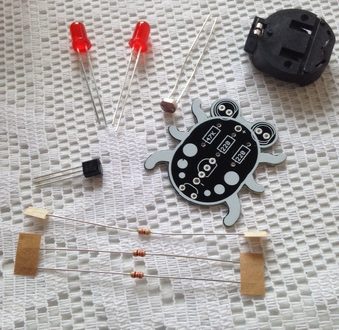
Objective: Students will learn about electronic components and electrical circuity by participating in the active soldering of a small project. The educational focus centers on the SparkFun Weevil kit.
When finished, the LEDs (eyes) will glow brighter when less light is sensed by the photocell.
Core Science Foundational Learning: The curriculum covers electricity and foundational problem-solving skills, with instruction on electrical components including PCBs, LEDs, resistors, transistors, photocells, and coin cell batteries.
Additional Vocabulary: Key terms introduced are polarized components, solder, and soldering iron.
Safety Concerns: The soldering tip gets very hot and will burn. It's hot enough to melt metal. The lesson emphasizes hand-washing after soldering and wearing eye protection when cutting component leads.
Electricity Basics: Electrons have an easier time flowing through metal, which is a material called a conductor. Excessive solder can create shorts that bypass intended components.
Soldering Steps: Position the iron tip to contact both the pin and metal ring, apply solder to the warmed pin (not directly to the iron), and aim for a "little volcano" appearance for a proper connection.
Components: Photocell, Transistor, Soldering Iron, Battery, Diode, LED, Push Button, Resistor, PCB. Learn more about each component.
Why do this?
Why not?! Because building with electronics and programming is fun and magical. (You're working with liquid metal!) I wanted to make the process more accessible.
The open source nature of both software and hardware combined with the growing DIY movement has enabled many creative solutions.
My Background
Before entering the cybersecurity field, I spent several years teaching middle and high school students. As much as I enjoy working in security, I missed the energy of the classroom and the joy of helping others learn. That led me to take a short travel break to Kathmandu, where I taught soldering, basic electronics and programming to students.
Contact
Get in touch if you'd like.